This CD player is an item to behold and was built between 1994 and 1996. It’s a good example of mass market “peak CD” hardware – certainly amongst the pinnacle of those machines utilising a single rather than triple laser arrangement. It is massively over-engineered and is a victory of style over substance but it makes me feel good to own it. Very minimalist with a studio look. The single lasers in my opinion track scratched CD’s better.
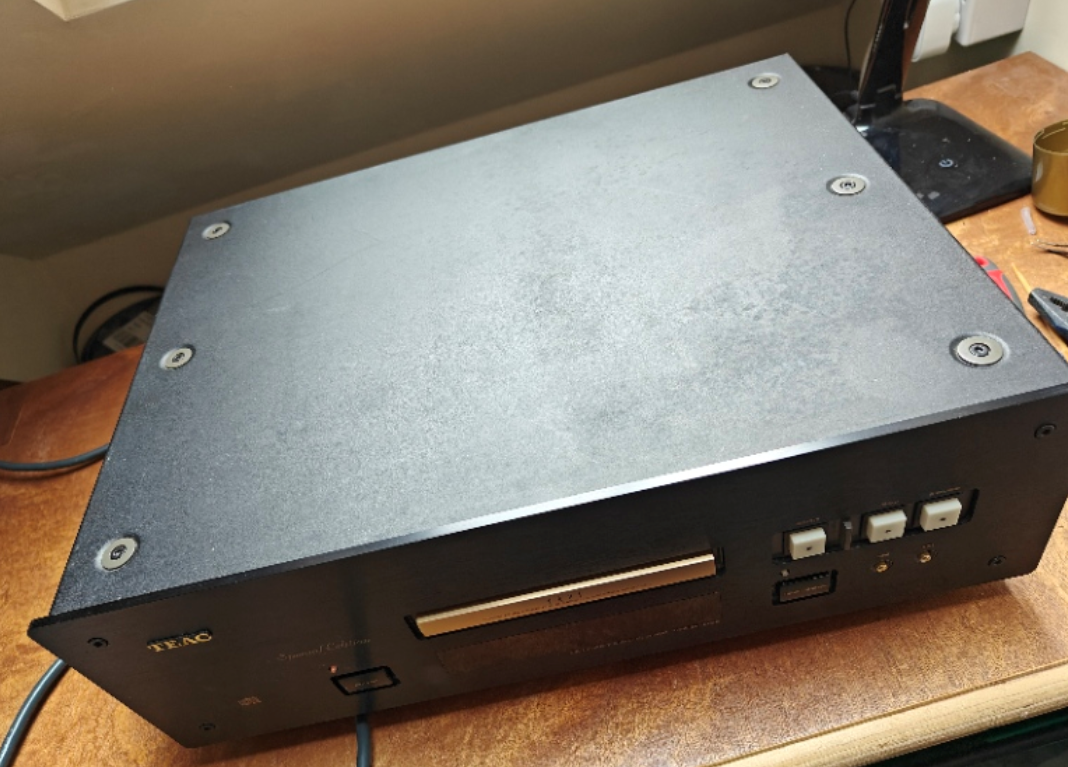
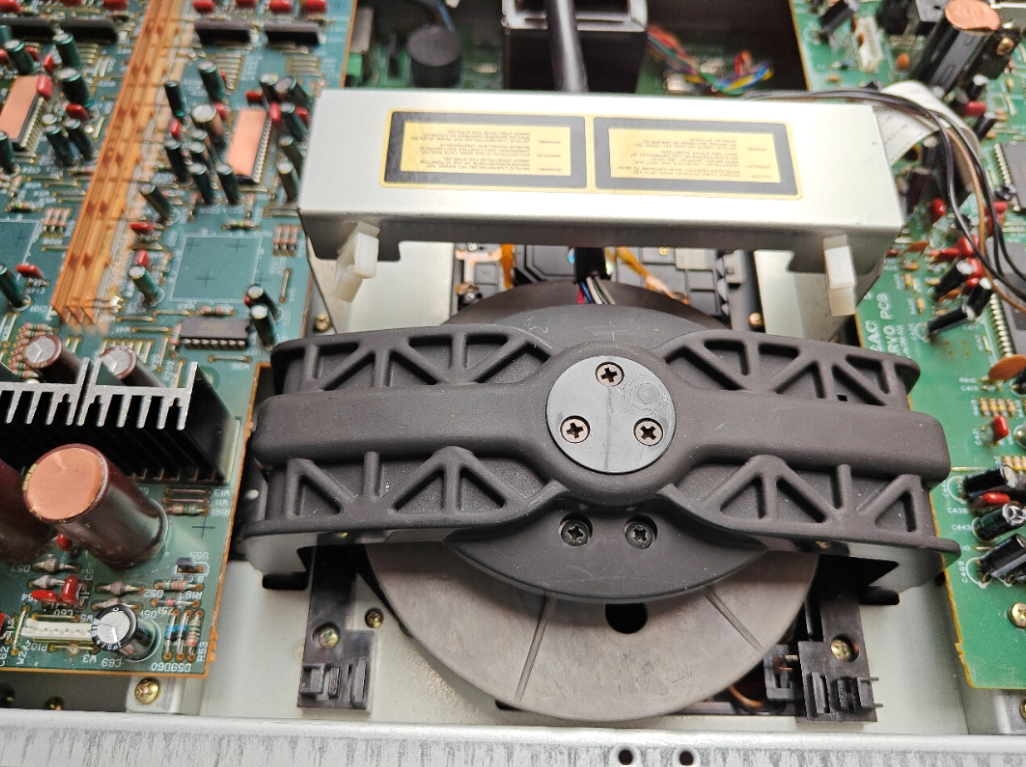
The USP is the disc spinner arrangement whereby the spindle rises to press the loaded CD up against a motor driven platter that sits above the disc and hence rigidly locking the media. (How much of problem this solution addresses is probably secondary to the marketing behind the product but Pioneer, Denon, Wadia and Esoteric were doing similar things). See pic.
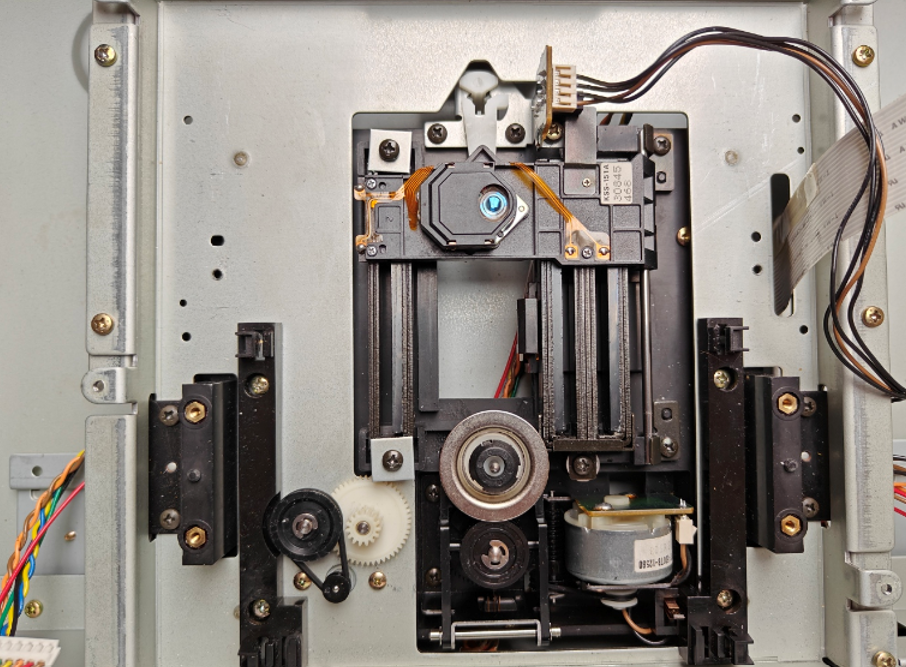
Below. With the platter assembly is removed showing parked laser, tray motor and the worm-driven disc lifter (each with microswitch). If dismantling the worm drive and screw lifter, note the rotation point of that screw lifter when disassembling.
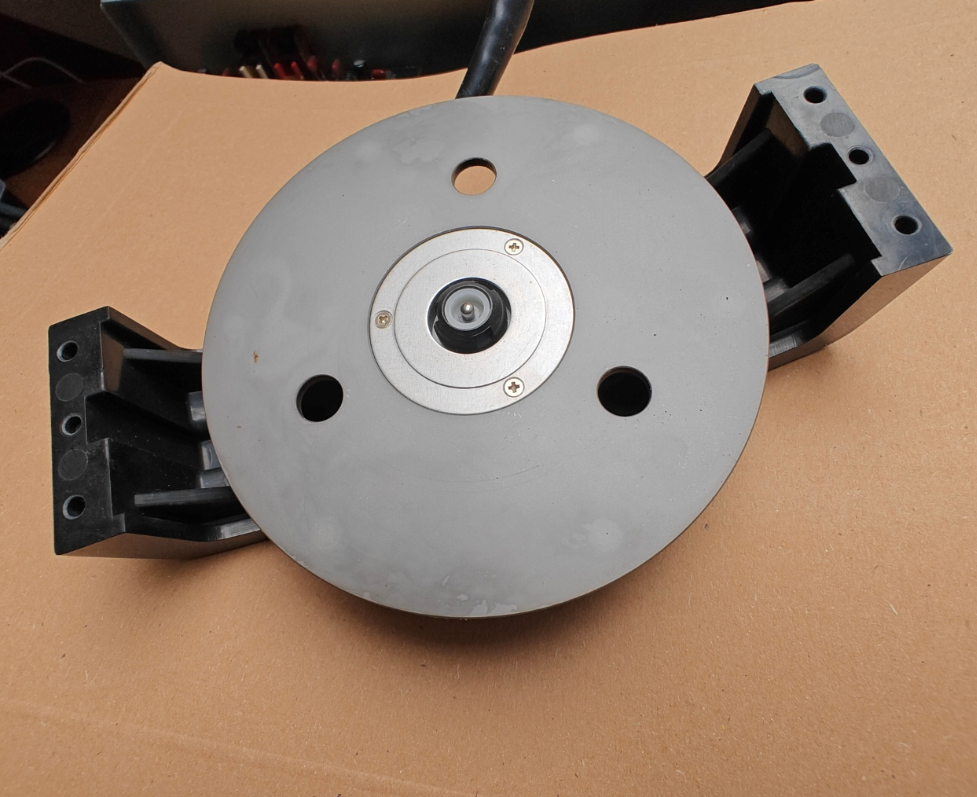
The motor I think is a hall effect thingy with seven wire plus earth going to it. The bridge is cast resin I think. The platter is some sort of alloy so there is a lot of mass being spun around which I am guessing dampens rotational speed anomalies. It spins eerily quiet as well. Great (over) engineering.
The laser is an increasingly rare Sony KSS 150A that uses a couple of linear coil/magnet actuators as shown in the pic below showing the laser that was replaced. I guess this came a cropper along with the Philips CDM and Pro family when the PC industry drove cheaper, faster random access and more compact three beam designs.
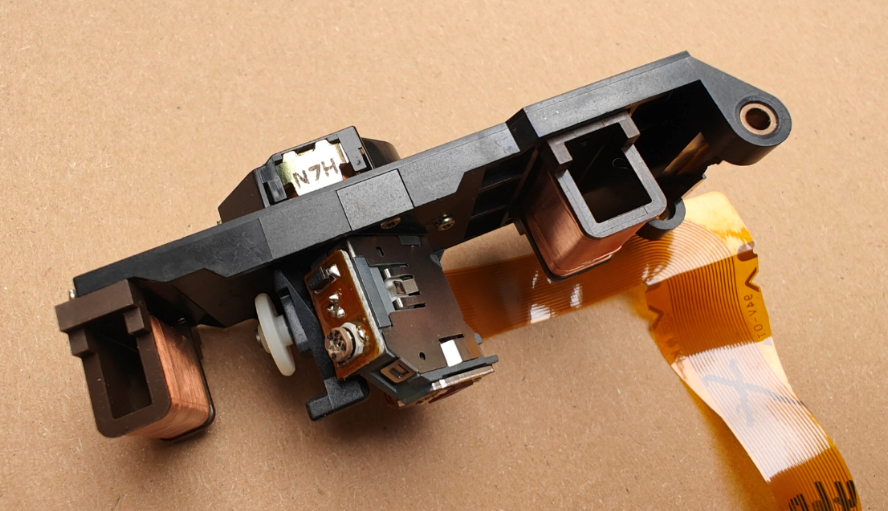
I bought the player as non-working. It had symptoms of a duff laser.
I replaced this with a working laser unit from a Tascam CD 401 mk2 of similar vintage and at one point got the TEAC drive assembly to load, read TOC, play, skip, pause, FF, REW stop and eject before assembly of the s DAC/audio board. Somehow I buggered it on re-assembly.
The two boards are a delight of topography in themselves with mostly discrete components and a decent amount of elbow room. Un-earthed copper foil over some chips is a bit of a snake oil mystery though.
My electronic capabilities are rudimentary and I have hit a wall. The power bulb (don’t think they are LEDS) comes on but nothing works.
I do remember that during reassembly the servo board didn’t quite sit flush with the screw holes and in retrospect the force I applied may possibly have stressed a solder joint. Maybe. I simply don’t know where to start with further diagnosis.
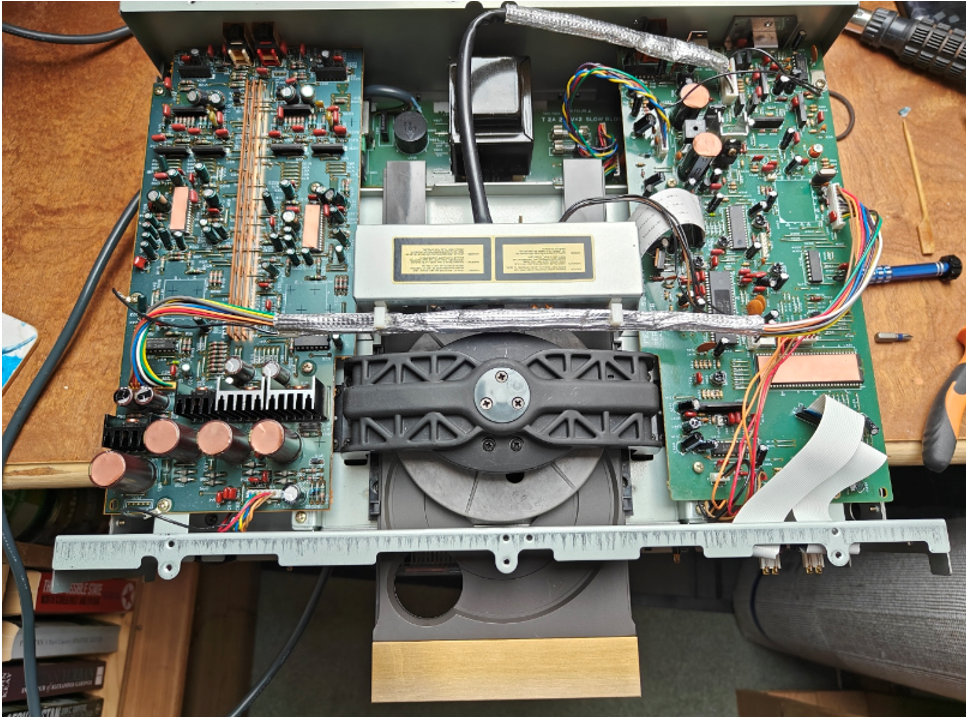
I actually have a working (non SE) version of this and the difference are the DACs and more complex audio stages featured in the SE. I remember “Special Edition” versions of Marantz, Philips, Rotel, Sony, Pioneer et al popping up periodically at this time (probably to delay big re-engineering associated with new models).
I have the spec and service manual with laser adjustment procedures and circuit diagrams and a schematic.
Interestingly there is a straight forward way to measure the health of the laser outlined in the manual. My working machine’s laser has degraded by less than 0.2mA in over thirty years use. A 10mA drift is allowed. Wow!! So they can last forever but new ones have unknown provenance and will still cost at least £250 with no recourse.
The donor Tascam I purchased (for £80) was working perfectly independently and I have retained the servo board so have the chipset for the Sony laser.
One point of note is that getting the donor laser to slide freely was a challenge which I think was down to tolerance differences in the sled assemblies between the makes. I achieved a working solution by not tightening the anchor screws evenly and applying Loctite. A bodge but pragmatic.
The second point was the worm drive/spindle lifter which remains noisy. Nothing appears worn and the motor is gutsy but a strange grumbling resonance persists. Regarding the worm drive arms that hold it in place. I bent one in towards the worm and it did to a degree soften the grelching noise. Another bodge
There is a lot if interesting engineering and being able to repair it would mean a great deal as it is a present intended for my son who is just getting into good sound reproduction and has just discovered that CD’s really are audibly very good indeed.